VoiceStudio: Local Voice Cloning, Dubbing and Audiobooks
A practical look at an open-source local voice workflow, its MCP integration, privacy advantages and real operational tradeoffs.
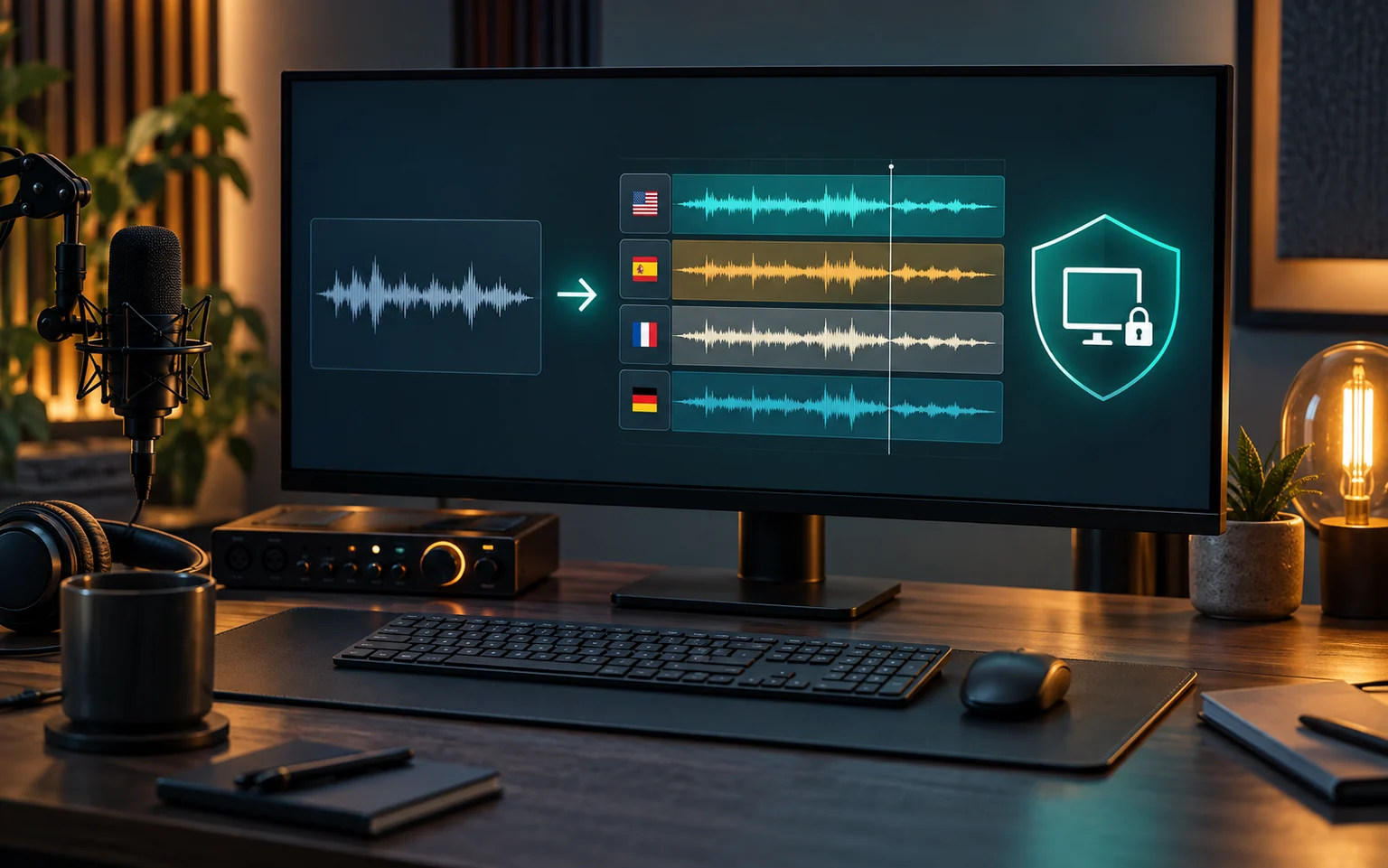
VoiceStudio local voice platform shared on X
Watch the original post and video on X
VoiceStudio is an open-source project for voice design and cloning, TTS, dubbing, transcription, dictation and audiobook workflows. Local operation can improve control and privacy, but hardware, model licenses and optional external services still require review.
- Local workflows improve file control
- Performance depends on hardware and model
- Clone only voices with explicit consent
- Use MCP with approval and logging
What VoiceStudio covers
The project documents voice cloning and design, text-to-speech, video dubbing, transcription, dictation and audiobook workflows, with broad language coverage and MCP support.
Local does not mean effortless
- Models require storage and compute
- CPU and GPU speed differ substantially
- Commercial licenses vary by model
- Some optional integrations may use remote services
- The team owns updates and security
Useful business applications
- Multilingual training narration
- Document-to-audiobook workflows
- Private meeting transcription
- Voice prototypes before final talent recording
- Agent-triggered audio generation through MCP
Consent and safety
Document consent, define usage scope and review platform synthetic-media rules before publishing cloned voices.
Learn AI image, video and audio workflowsFrequently asked questions
Is VoiceStudio entirely free?
The project is open source, but hardware and optional models or services may carry costs.
Does audio always stay local?
A local setup can keep it on-device, but verify every engine and integration in the selected workflow.
Sources
- [1] VoiceStudio repository — GitHub · accessed 2026-09-27
- [2] VoiceStudio MCP integration — GitHub · accessed 2026-09-27
- [3] VoiceStudio feature summary on X — Liam Braus on X · accessed 2026-09-27